


Your Essential Guide to Water Heater Care in Greeley
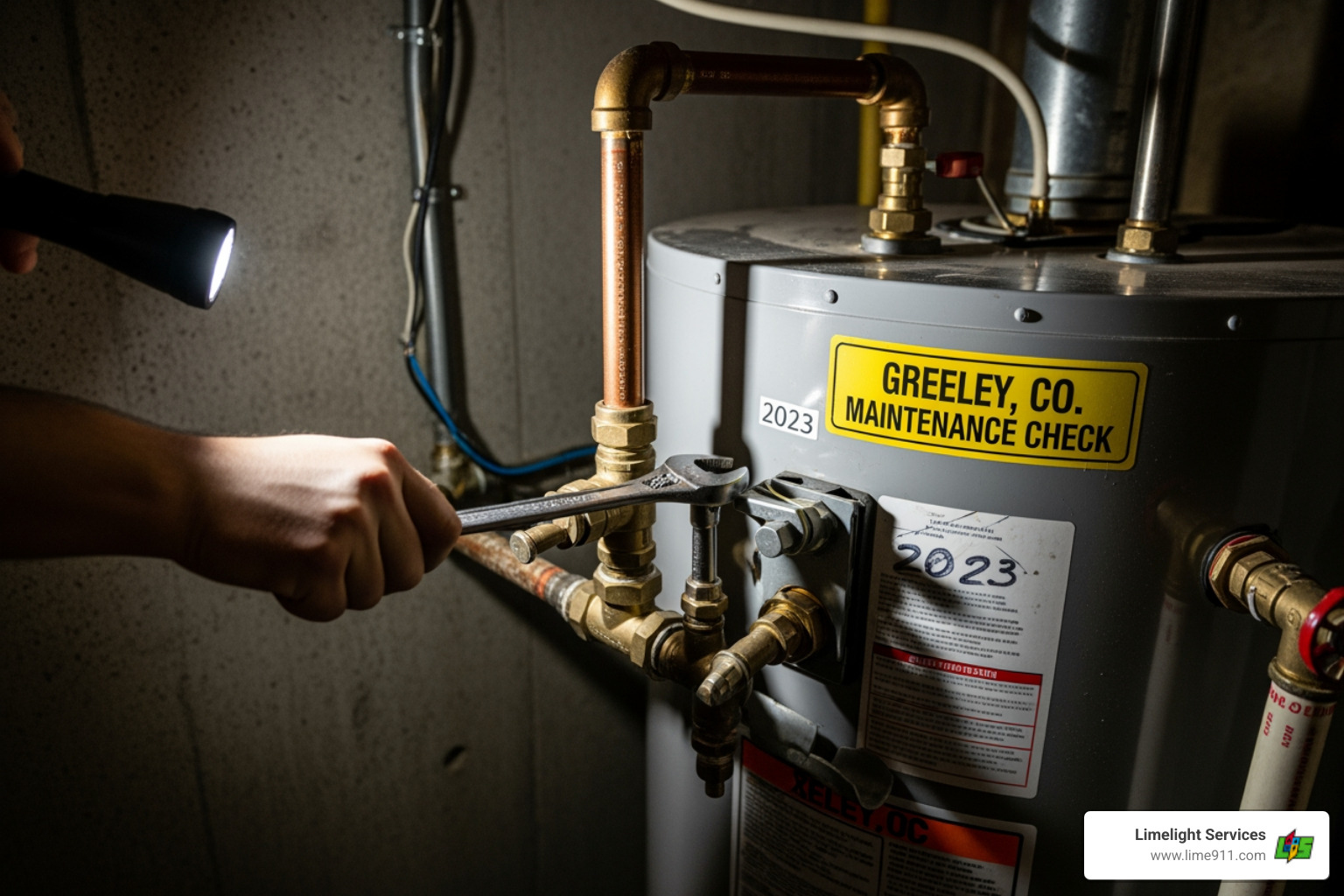
Consistent hot water is a daily necessity, and proper water heater maintenance in Greeley, CO, is key to ensuring your system runs efficiently and reliably. Without regular care, you risk cold showers, high energy bills, and even system failure. This is especially true in Greeley, where hard water can accelerate sediment buildup. This guide covers the essential steps to keep your water heater in top condition, extending its lifespan and preventing costly repairs.
For comprehensive home comfort solutions, explore our full range of plumbing services in Greeley, CO, or get started with professional water heater maintenance today.
Quick Answer: Essential Water Heater Maintenance Tasks
- Annual tank flushing to remove sediment and mineral buildup
- Temperature check – set to 120°F for safety and efficiency
- Anode rod inspection – replace when heavily corroded
- TPR valve testing – ensure it releases water properly
- Leak inspection – check around the base and connections
- Professional service – schedule yearly for a thorough inspection
Regular maintenance extends your water heater's lifespan from the typical 5-10 years for tank models to their maximum potential, while tankless units can last 12-15 years or more with proper care. In Greeley's hard water conditions, these tasks become even more important to prevent costly repairs and ensure your family always has reliable hot water.
Why Regular Water Heater Upkeep is Crucial in Greeley
Imagine waking up to a cold shower on a chilly Greeley morning – not the most pleasant start to your day, is it? This common scenario is often a direct result of neglecting your water heater. For homeowners in Greeley and throughout Northern Colorado, regular water heater upkeep isn't just a suggestion; it's a necessity. Our reliance on hot water for everything from bathing and cleaning dishes to washing clothes makes a well-maintained water heater an indispensable part of our daily lives.
One of the primary drivers for diligent maintenance in our area is Greeley's specific water quality. Our local water, while safe and delivered by the city for over 100 years, often contains a higher concentration of minerals, commonly known as "hard water." This characteristic significantly impacts your water heater's performance and lifespan. Without proper care, these minerals can accumulate, leading to decreased efficiency, potential damage, and even safety hazards.
Beyond addressing local water conditions, consistent maintenance offers a wealth of benefits. It ensures energy efficiency, preventing your unit from working harder than it needs to, which in turn keeps your utility bills from skyrocketing. It acts as a preventative measure against unexpected breakdowns, saving you from the stress and expense of emergency repairs. Most importantly, it contributes to the safety of your home by ensuring critical components, like the Temperature and Pressure Relief (TPR) valve, are functioning correctly. Regular upkeep extends the life of your appliance, giving you more years of reliable hot water and peace of mind. We strongly advocate for homeowners to understand and participate in water conservation efforts, which often go hand-in-hand with efficient appliance use. You can learn more about how to be a responsible water user at Homeowners - Save Water.
The Impact of Greeley's Hard Water
Greeley's water quality, while excellent for consumption, presents unique challenges for home appliances, especially water heaters. The presence of minerals like calcium and magnesium in our local water supply contributes to what we call "hard water." These minerals don't just disappear; they settle and accumulate inside your water heater tank, forming a stubborn layer of sediment at the bottom. This process is often accelerated in hard water areas like ours. For more information on our local water, you can visit the Water and Sewer Home page.
This mineral buildup creates a significant barrier between the heating element (or burner) and the water itself. Consequently, your water heater has to work much harder and use more energy to heat the water, leading to reduced efficiency and higher energy bills. Over time, this sediment can also cause increased wear and tear on internal components, potentially leading to premature failure. Furthermore, the constant exposure to hard water and sediment can exacerbate corrosion within the tank, even with the protection of an anode rod (which we'll discuss shortly). Regular flushing becomes paramount in Greeley to combat these effects, removing accumulated sediment and allowing your water heater to operate as intended.
Key Benefits of Proactive Maintenance
Why bother with regular water heater maintenance Greeley CO? The answer boils down to extending the life of your valuable appliance, saving you money, and ensuring your family's comfort and safety.
- Extends the appliance's lifespan. A water heater is a substantial investment, and just like your car, it performs better and lasts longer with routine care. By preventing issues like sediment buildup and corrosion, we can help your unit reach its maximum potential lifespan, often surpassing the typical 5-10 year tank warranty for traditional models and the 12-15 year warranty for tankless systems.
- Lower energy bills. When sediment builds up, your water heater has to expend more energy to heat the water. Regular flushing and component checks ensure your unit operates at peak efficiency, reducing wasted energy and keeping more money in your pocket. Tankless water heaters, for instance, are known to be twenty-two percent more energy efficient than gas-fired hot water tanks when properly maintained.
- Prevent unexpected and costly repairs. Catching small issues early, such as a corroding anode rod or a faulty TPR valve, can save you from a major system failure down the line. It's often the difference between a minor adjustment and an emergency replacement.
- Improved water quality. Sediment and rust particles can lead to discolored or cloudy water. By keeping your tank clean, you ensure cleaner, clearer hot water for all your needs.
- Peace of mind. Knowing that your water heater is running safely and efficiently means one less thing to worry about in your busy life. For all your water heating needs, including maintenance, installation, and repair, explore our services for water heaters Greeley CO.
Warning Signs Your Water Heater Needs Service
Your water heater usually gives off subtle hints when it's not feeling its best. Paying attention to these warning signs can help us address issues before they escalate into major problems or even a complete system failure. Here's what to look out for:
- Rumbling or Popping Noises: If your water heater sounds like it's brewing a pot of popcorn or has rocks rolling around inside, it's likely due to sediment buildup at the bottom of the tank. As the heating element tries to heat water through this layer of sediment, it causes the water trapped beneath to boil and create these unsettling noises.
- Lukewarm Water or Inconsistent Temperatures: Are your showers starting hot but quickly turning cold? Or perhaps the water never gets as hot as it used to? This could indicate a failing heating element, a faulty thermostat, or excessive sediment interfering with the heating process.
- Discolored or Rusty Water: If your hot water appears rusty, cloudy, or has a metallic odor, it often points to corrosion inside the tank or a deteriorating anode rod. This is a clear sign that the integrity of your tank is compromised.
- Leaks or Moisture Around the Unit: Any puddles, drips, or signs of moisture around the base of your water heater or its connections are serious red flags. Leaks can range from minor drips from connections or the TPR valve to a crack in the tank itself, which often signals the end of the unit's life.
- Low Hot Water Pressure: If you notice a significant drop in hot water pressure, but your cold water pressure remains strong, sediment buildup or a blockage in the hot water outlet could be the culprit.
- Strange Odors from Hot Water: Besides metallic smells, if your hot water has a "rotten egg" smell, it could be due to a reaction between bacteria in the water and the anode rod, especially in homes with certain water chemistries.
If you observe any of these signs, it's a good idea to contact us. We're here to help with all your plumbing services Greeley CO.
A Homeowner's Essential Maintenance Checklist
While some aspects of water heater maintenance Greeley CO are best left to professionals, there are several key tasks homeowners can perform to keep their unit in good shape. Think of it as a basic health check-up for your water heater. Before attempting any DIY maintenance, always prioritize safety: turn off the power or gas supply to your water heater and the cold water supply. Always wear gloves, goggles, and other protective clothing, especially when dealing with hot water or potentially corrosive elements. For a comprehensive guide, you can refer to resources like the Water Heater Maintenance Guide | A. O. Smith.
Flushing the Tank to Remove Sediment
Flushing your water heater tank is arguably the most crucial maintenance task, especially in Greeley with our hard water. As we discussed, minerals and sediment accumulate at the bottom of the tank, reducing efficiency and potentially damaging the unit. Most types of tank water heaters require flushing at least once per year, or more often in hard water areas.
Here's an overview of the flushing process:
- Turn Off Power/Gas: First, ensure the power (for electric heaters) or gas supply (for gas heaters) to the unit is completely turned off. If it's a gas heater, you might also want to set it to "vacation" mode if it has one, or simply turn the gas knob to the "off" position.
- Turn Off Cold Water Supply: Locate the cold water inlet valve at the top of your water heater and turn it off. This stops new water from entering the tank.
- Allow Water to Cool (Optional but Recommended): If possible, let the water cool for a few hours. This reduces the risk of scalding during the draining process.
- Connect a Hose: Attach a garden hose to the drain valve located at the bottom of the water heater. Extend the hose to a floor drain or outside area where hot, sediment-filled water can safely drain.
- Open Hot Water Faucet (or TPR Valve): Open a hot water faucet somewhere in your house (like a bathtub or sink). This allows air into the system, preventing a vacuum and helping the water drain faster. Alternatively, you can carefully lift the lever on the TPR valve.
- Open the Drain Valve: Open the drain valve on the water heater. You'll see water, often cloudy or discolored with sediment, flowing out through the hose.
- Flush Until Clear: Let the water drain until it runs clear. This indicates that most of the sediment has been removed. You can even briefly open the cold water supply valve with the drain valve still open to "power flush" any stubborn sediment, but be mindful of the water temperature.
- Close Valves and Refill: Once the water runs clear, close the drain valve on the water heater and remove the hose. Close the hot water faucet you opened earlier. Then, slowly open the cold water supply valve to begin refilling the tank.
- Purge Air and Restore Power: Once the tank is full (you'll hear water flowing and then stop, and water will flow from an open hot water faucet), turn off the hot water faucet. Check for leaks around the drain valve and connections. Finally, restore power or gas to your water heater.
Flushing your tank regularly improves its efficiency by removing the insulating layer of sediment, allowing the heating elements to work directly on the water. This also extends the tank's life by reducing internal stress and corrosion. If you're uncomfortable with any part of this process, it's always best to call a professional. For more detailed safety precautions, the A. O. Smith PDF summary offers valuable insights.
Inspecting Key Safety and Performance Components
Beyond flushing, several other components require regular inspection to ensure your water heater's safety and optimal performance.
Anode Rod Function: Often called the "sacrificial rod," the anode rod is a crucial component designed to protect your water heater tank from corrosion. Made typically of magnesium, aluminum, or zinc, it attracts corrosive minerals and elements in the water, sacrificing itself instead of allowing the steel tank to rust.
- Sacrificial Rod Corrosion Check: We recommend inspecting the anode rod annually. To do this, you'll need to turn off the water heater, shut off the cold water supply, and partially drain the tank to below the level of the anode rod. Then, carefully unthread and remove the rod. A healthy rod should be relatively thick. If it's heavily corroded, significantly reduced in diameter (less than half an inch), or covered in calcium deposits, it's time for a replacement. A properly functioning rod in good condition should be around a half-inch in diameter. Neglecting this can lead to premature tank failure.
TPR Valve Testing: The Temperature and Pressure Relief (TPR) valve is a vital safety device. It's designed to automatically open and release water if the temperature or pressure inside the tank exceeds safe limits, preventing a potentially dangerous explosion.
- TPR Valve Testing: We suggest testing your TPR valve annually. To test it, ensure the area around the discharge pipe is clear. Gently lift the lever on the TPR valve for a few seconds. You should hear and see water discharging from the pipe. If no water comes out, or if it only drips, the valve may be corroded or clogged with mineral deposits and needs to be replaced immediately. This is a critical safety component, and a malfunctioning valve can pose a serious risk.
Recommended Temperature Setting (120°F): Balancing safety and efficiency is key when setting your water heater's temperature. Many water heaters are installed with a factory setting of 140°F, which can be dangerously hot, causing scalding in a matter of seconds.
- Safety and Efficiency Balance: We recommend setting your water heater to 120°F. This temperature is hot enough for most household needs, significantly reduces the risk of scalding, and slows down the rate of mineral deposit settlement, which is particularly beneficial in hard water areas like Greeley. Setting it lower might encourage bacterial growth in the tank, while higher settings waste energy and increase burn risk.
By regularly checking these components, you contribute significantly to the safe and efficient operation of your water heater, extending its life and protecting your home.
Maintenance for Different Water Heater Types
While the goal of all water heater maintenance is to prolong lifespan and ensure efficiency, the specific tasks can vary between traditional tank-style and tankless (on-demand) water heaters. Understanding these differences is key to effective water heater maintenance Greeley CO.
| Maintenance Task | Traditional Tank Water Heater | Tankless Water Heater |
|---|---|---|
| Frequency | Annual professional inspection and DIY checks. | Annual professional inspection and descaling, especially in hard water areas. |
| Key Task | Flushing the tank to remove sediment buildup. This is crucial in areas with hard water like Greeley. | Descaling (de-liming) the heat exchanger to remove mineral deposits that restrict water flow and reduce efficiency. |
| Component Checks | Inspect the anode rod for corrosion and the TPR valve for proper function. | Clean or replace the in-line water filter and check the air intake and exhaust vents for blockages. |
| Energy Efficiency | Efficiency can decrease over time if sediment builds up. Regular flushing helps maintain its original efficiency rating. | Can be up to twenty-two percent more energy-efficient than gas-fired hot water tanks. Regular descaling is essential to maintain this high efficiency. |
| Lifespan | Typically 8-12 years. Regular maintenance can extend this. | Can last 20 years or more with proper care. |