


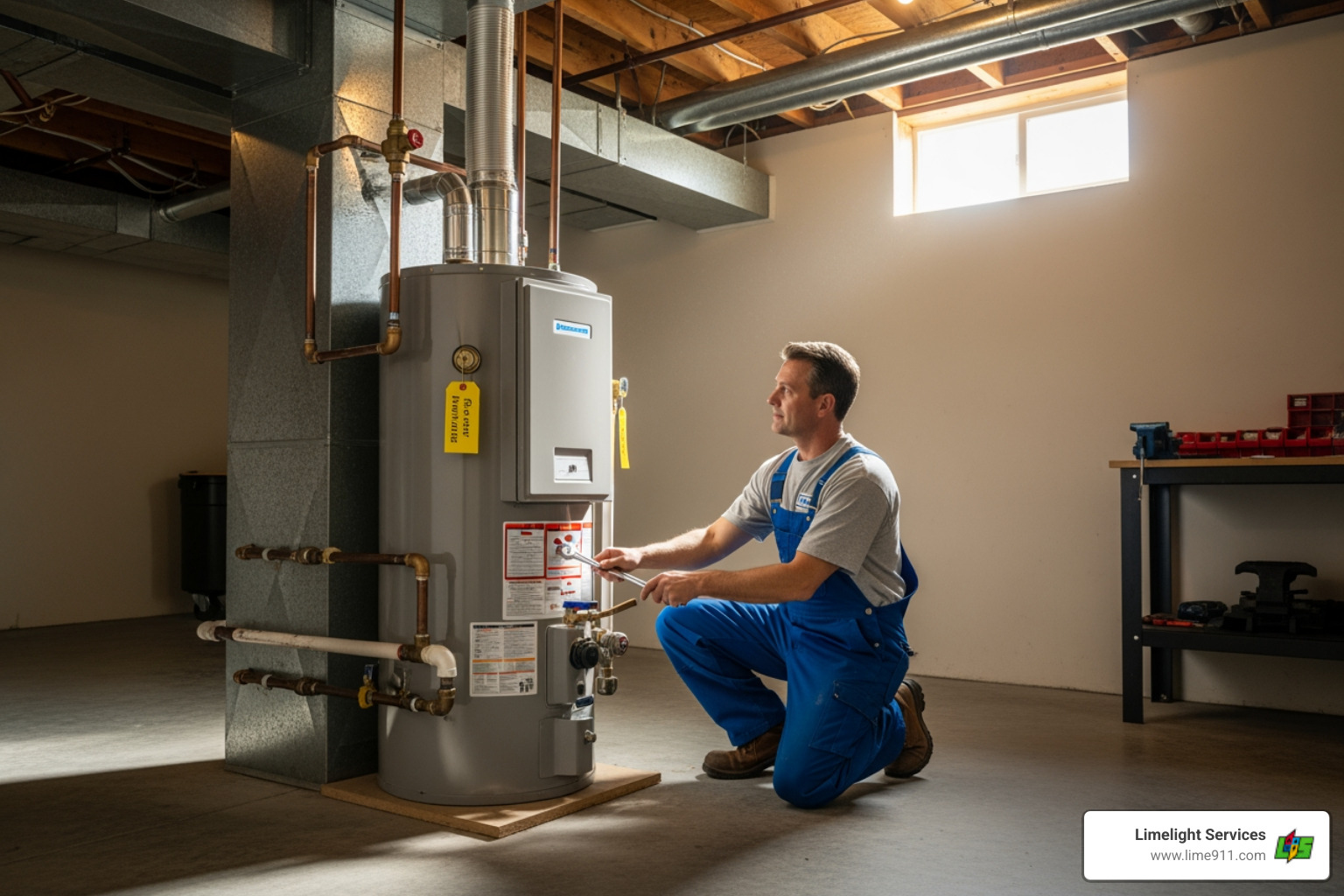
Why Your Greeley Water Heater Deserves Expert Care
If you're a homeowner in Northern Colorado, finding the best water heater maintenance in greeley, co means protecting one of your home's hardest-working appliances. Your water heater runs constantly behind the scenes, delivering hot water for showers, dishes, laundry, and cleaning—until it doesn't. Without regular maintenance, Greeley's hard water can silently damage your system, leading to costly repairs, sky-high energy bills, or complete failure at the worst possible moment.
What makes water heater maintenance "best" in Greeley:
- Annual tank flushing to remove hard water sediment buildup
- Anode rod inspection to prevent tank corrosion
- Temperature and pressure relief valve testing for safety
- Professional inspection of heating elements, thermostats, and connections
- Local expertise with Greeley's specific water quality challenges
For comprehensive home comfort solutions, explore our full range of heating and cooling services, or schedule your water heater maintenance today.
The good news? Preventive maintenance is simple and catches problems early. Most water heaters last 10-15 years, but only with proper care. Greeley's mineral-rich water accelerates wear and tear, making regular professional attention even more important. A well-maintained water heater runs more efficiently, costs less to operate, and won't leave you shivering through a cold shower on a February morning.
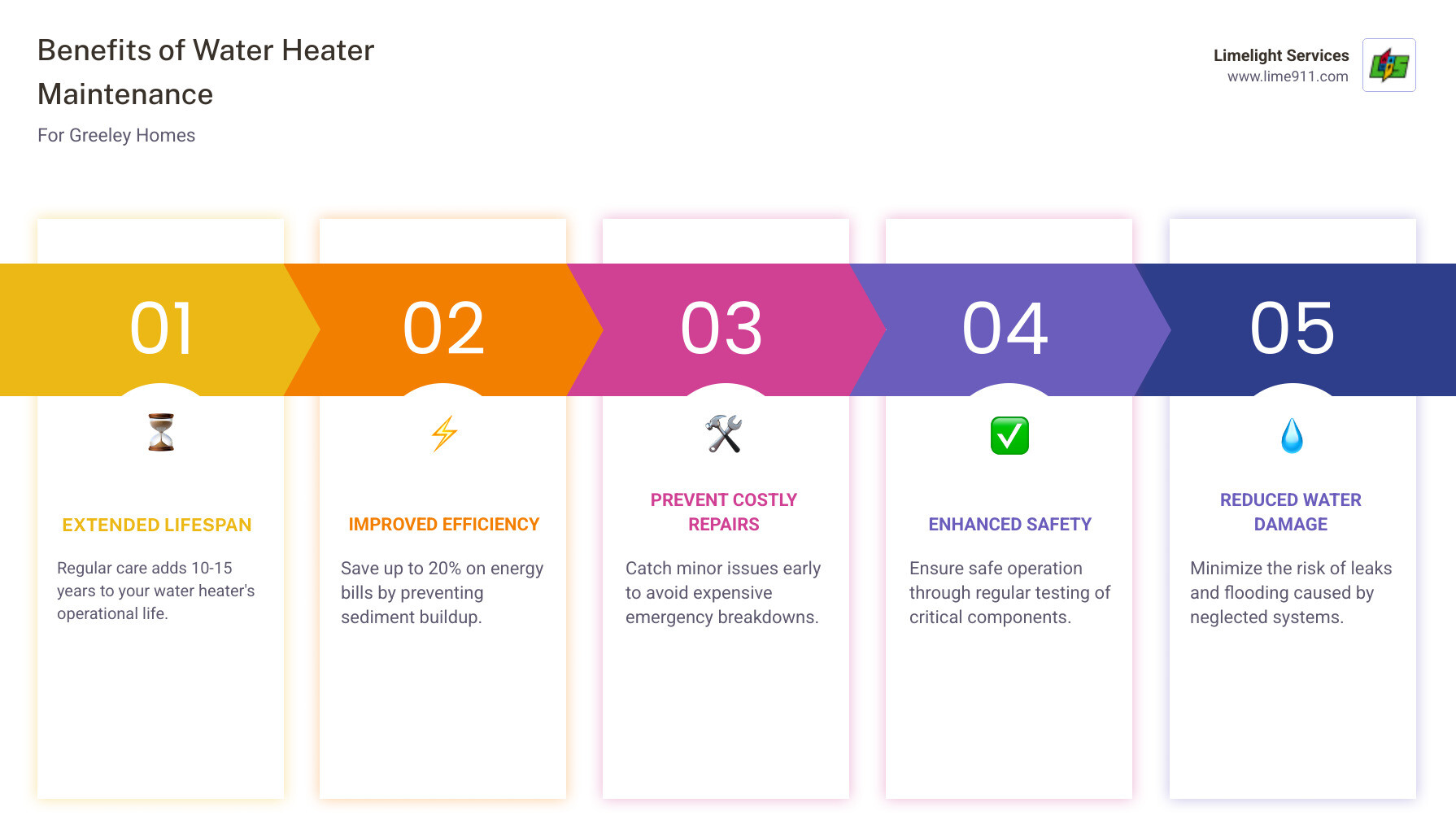
Why Regular Water Heater Maintenance is Crucial for Greeley Homes
In Greeley, CO, our homes rely on water heaters to provide the comfort and convenience of hot water every day. But with Greeley's unique water quality, neglecting your water heater is like inviting trouble to a party – it’s only a matter of time before things get messy.
One of the biggest factors affecting water heaters in Greeley and across Northern Colorado is hard water. Hard water contains high levels of dissolved minerals, primarily calcium and magnesium. While generally safe to drink, these minerals are notorious for causing problems for your home's plumbing and appliances. For your water heater, this means:
- Sediment Accumulation: As water heats up, these minerals precipitate and settle at the bottom of your water heater tank, forming a layer of sediment. This sediment acts as an insulator, making your water heater work harder to heat the water. It’s like trying to boil water in a pot with a thick layer of mud at the bottom – inefficient and slow! Sediment accumulation is one of the most common water heater problems we see in Greeley.
- Accelerated Corrosion: Hard water, especially with high sediment content, can accelerate the corrosion of internal components, particularly the anode rod and the tank lining itself. Without proper maintenance, this can lead to premature tank failure.
- Reduced Efficiency: That insulating layer of sediment means your water heater uses more energy to achieve the desired temperature. This translates directly to higher utility bills, which no one wants. Regular maintenance, including flushing, can significantly improve your water heater’s energy efficiency.
- Shortened Lifespan: Water heaters are built to last, typically 10 to 15 years. However, the constant battle against hard water and sediment can drastically cut short this lifespan. Routine maintenance is vital for extending the life of your current water heater and ensuring consistent performance, potentially helping it reach or even exceed its expected age.
- Preventing Unexpected Breakdowns: Imagine stepping into a cold shower on a chilly Greeley morning, or finding a pool of water in your basement. Regular maintenance helps us identify and address minor issues before they escalate into major, costly repairs or inconvenient breakdowns.
- Ensuring Home Safety: A well-maintained water heater is a safe water heater. We perform checks on critical safety components like the temperature and pressure relief (TPR) valve and inspect for any gas or electrical issues, helping prevent dangerous situations.
- Preventing Water Damage: Leaks are a common sign of a failing water heater and can lead to extensive water damage in your home. By performing regular inspections and addressing potential issues early, we can help prevent costly water damage. If you suspect a leak, our leak detection in greeley, co services can pinpoint the problem quickly. For more serious issues, our water heater repair in greeley, co team is ready to help.
Regular water heater maintenance in Greeley isn't just about keeping your appliance running; it's about protecting your investment, saving on energy costs, and ensuring the safety and comfort of your home.
Telltale Signs Your Water Heater Needs Professional Attention
Your water heater often gives subtle (and sometimes not-so-subtle) hints that it’s not feeling its best. Ignoring these signs can turn a minor issue into a major headache, or worse, an emergency. We've seen it all, and we're here to tell you what to look out for.
Keep an eye (and ear) out for these common indicators that your water heater is waving a white flag:
- Inconsistent Temperatures or Lukewarm Water: Are your showers starting hot but quickly turning cold? Or perhaps the water never gets as hot as it used to? Inconsistent water temperatures are a classic sign of a problem, often related to a failing heating element (in electric models), a faulty thermostat, or excessive sediment buildup reducing efficiency.
- Strange Noises: Water heaters aren't typically very vocal, so any rumbling, popping, or banging sounds are a red flag. These noises usually indicate a buildup of sediment at the bottom of the tank. As the heating element attempts to heat the water, it has to heat through the sediment layer first, causing the water trapped beneath to boil and create these sounds.
- Discolored Water: If your hot water comes out rusty or cloudy, it’s a strong indicator of internal corrosion. This could mean your anode rod (the "sacrificial" component designed to rust instead of your tank) has completely deteriorated, or the tank itself is corroding. Discolored hot water can be caused by a failing anode rod or corrosion within the tank, potentially requiring replacement.
- Smelly Water: Hot water that smells like rotten eggs usually points to a bacterial presence in the tank, often exacerbated by a depleted anode rod. This is a clear sign that your tank needs a thorough flushing and inspection.
- Visible Leaks or Moisture: Any water pooling around the base of your water heater, or even condensation on the tank, is cause for concern. Leaks can stem from various points: the temperature and pressure relief (TPR) valve, connections, or even a crack in the tank itself. Leaks are a serious issue and should be addressed immediately to prevent significant water damage. If you spot a leak, it might be time to call an emergency plumber in greeley, co.
- Low Hot Water Pressure: If your hot water flow has decreased significantly compared to your cold water flow, it could be due to mineral buildup in the pipes or inside the water heater itself, restricting water flow.
Key Signs You Need the Best Water Heater Maintenance in Greeley, CO
To summarize, here are the top 5 warning signs that indicate your water heater needs the best water heater maintenance in greeley, co:
- Noises: Persistent rumbling, popping, or banging sounds from the tank.
- Leaks: Any visible water pooling around the unit, no matter how small.
- Discolored Water: Rusty, cloudy, or otherwise abnormal hot water.
- Temperature Fluctuations: Hot water that runs out too quickly or never gets hot enough.
- Age: If your water heater is approaching or has exceeded its typical lifespan of 10-15 years, it's wise to have it inspected regularly.
These issues can often be traced back to problems like a failing anode rod, which is crucial for preventing tank corrosion, faulty heating elements that aren't properly heating the water, or thermostat issues that lead to incorrect temperature regulation. Don't let these signs linger; addressing them proactively can save you from bigger problems down the line. Our team is expert in all types of water heaters in greeley, co.
What Does the Best Water Heater Maintenance in Greeley, CO Include?
When we talk about the best water heater maintenance in greeley, co, we're referring to a comprehensive service that goes beyond a quick glance. It's a thorough process designed to extend your unit's lifespan, improve efficiency, and ensure safety.
Here’s what our professional water heater maintenance typically includes:
- Comprehensive Safety Inspection: Safety is always our top priority. We start by inspecting the entire unit for any visible signs of wear, damage, or potential hazards. This includes checking the relief valve, burner assembly (for gas units), and electrical connections (for electric units).
- Flushing the Tank and Sediment Removal: This is perhaps the most critical step for Greeley homeowners. We drain the water heater tank completely to remove the sediment and mineral deposits that accumulate over time due to our hard water. This process helps restore efficiency, prevents overheating, and reduces those noisy rumbling sounds.
- Anode Rod Inspection: The anode rod is often called the "sacrificial rod" because it's designed to corrode before the steel tank does. We inspect its condition and recommend replacement if it's significantly corroded or reduced in size, which is especially important with Greeley's water quality. A healthy anode rod is key to extending your tank's life.
- Temperature & Pressure Relief (TPR) Valve Test: The TPR valve is a crucial safety device that opens automatically if the temperature or pressure inside the tank becomes too high. We test this valve to ensure it's operating correctly, preventing dangerous pressure buildup.
- Checking for Gas Leaks (Gas Water Heaters): For gas models, we carefully check all gas connections and lines for any leaks, ensuring your home's safety. This is a vital part of our heating services in greeley, co.
- Inspecting Electrical Connections (Electric Water Heaters): For electric models, we inspect all electrical connections and wiring, ensuring they are secure and free from corrosion or damage to prevent electrical hazards and ensure proper heating.
- Thermostat and Heating Element Check: We verify that the thermostat is functioning accurately and that heating elements (for electric units) or burner assembly (for gas units) are operating efficiently to provide consistent hot water.
Maintenance for Different Water Heater Types
While the core goal of maintenance remains the same, the specifics can vary depending on your water heater type.
| Feature/Task | Traditional Tank Water Heaters | Tankless Water Heaters |
|---|---|---|
| Primary Goal | Prevent sediment buildup, corrosion, and ensure safety. | Prevent mineral scale buildup, ensure efficient flow, and safety. |
| Flushing/Descaling | Annual tank flush to remove sediment. | Annual descaling (acid flush) to remove hard water minerals. |
| Anode Rod | Critical for preventing tank corrosion; inspect and replace annually. | Not present in tankless units. |
| TPR Valve Test | Essential safety check, performed annually. | Essential safety check, performed annually. |
| Burner/Element Check | Inspect burner assembly (gas) or heating elements (electric). | Inspect heat exchanger and ignition system. |
| Filter Cleaning | Not applicable. | Clean inlet water filter. |
| Venting/Air Supply | Inspect flue and ventilation (gas). | Inspect air intake and exhaust vents (gas). |
- Traditional Tank Heaters: These are the most common in Greeley. Their maintenance focuses heavily on flushing sediment, inspecting the anode rod, and ensuring the TPR valve is functional. Gas water heaters also require careful inspection of the burner assembly and flue for proper ventilation, which falls under our comprehensive heating in greeley, co expertise. Electric water heaters require checks on their heating elements and electrical connections.
- Tankless Water Heaters: These units provide hot water on demand and are known for their energy efficiency and longer lifespan (up to 20 years with proper care). Their primary maintenance task is a "descaling" process, where a solution is circulated through the unit to remove mineral buildup from the heat exchanger. This ensures optimal performance and prevents costly repairs. They also require filter cleaning and vent inspections.
Regardless of your water heater type, our detailed maintenance routine ensures your system is running safely and efficiently, saving you headaches and money in the long run.
DIY Water Heater Checks vs. Professional Service
We understand the homeowner's desire to tackle tasks around the house. When it comes to your water heater, there are certainly some checks you can perform yourself. However, it’s crucial to know where the DIY ends and where professional expertise begins, especially given the complexities and safety risks involved.
DIY Water Heater Checks:
You can safely perform a few basic tasks to keep an eye on your water heater:
- Visual Inspection: Regularly check the area around your water heater for any signs of leaks, rust, or corrosion. Look for wet spots or pooling water on the floor.
- Checking Temperature Setting: Ensure your thermostat is set to around 120 degrees Fahrenheit. This is typically the industry standard for safety and efficiency. Going higher can increase scalding risk and energy consumption.
- Keeping Area Clear: Make sure the area around your water heater is free from clutter, flammable materials, or anything that could block vents or access panels.
- Monitoring Water Temperature: Pay attention to your hot water supply. If it's consistently too cold, too hot, or running out quickly, it’s a sign to investigate further.
- Daily Checks (for gas water heaters): Briefly check that vents and flues are free from debris to ensure proper ventilation.
DIY Tips vs. When to Call for the Best Water Heater Maintenance in Greeley, CO
While these DIY checks are helpful, many critical maintenance tasks should be left to certified professionals. The safety risks of DIY repairs, especially when working with gas lines or electrical components, are significant and can lead to serious injury or damage. We promise, your YouTube degree won't cover everything!
| Task | DIY Friendly? | Professional Only? | Why? |
|---|---|---|---|
| Visual Inspection | Yes | No | Simple observation for leaks or rust. |
| Temperature Setting Check | Yes | No | Easy to adjust, but professional can verify thermostat accuracy. |
| Flushing the Tank | Limited | Yes | While theoretically possible, proper draining and refilling to prevent airlocks or damage to the unit requires specific tools and knowledge. Incorrect flushing can lead to more sediment issues or even tank damage. |
| Anode Rod Replacement | No | Yes | Requires specialized tools to remove, and proper knowledge of different anode rod types and installation. Incorrect installation can damage the tank or lead to leaks. |
| TPR Valve Test | Limited | Yes | You can lift the lever briefly, but a professional fully tests its function and knows when replacement is necessary. A faulty TPR valve is a serious safety hazard. |
| Gas Line/Electrical Checks | No | Yes | Extreme danger of gas leaks, carbon monoxide poisoning, or electrical shock. Requires licensed expertise. |
| Heating Element/Burner Inspection | No | Yes | Requires specialized knowledge to safely access and inspect, as well as proper tools for testing and replacement. |
| Tankless Descaling | No | Yes | Involves specific chemicals and a circulation pump to effectively remove scale without damaging the unit. |
When in doubt, always call a professional. Incorrect DIY repairs can often lead to more significant damage, turning a small problem into a costly disaster. Our team can handle all aspects of water heater maintenance and is also skilled in related plumbing health issues, such as drain cleaning in greeley, co and garbage disposal repair in greeley, co, ensuring your entire plumbing system is in top shape.
Frequently Asked Questions about Water Heater Care in Greeley
We often hear similar questions from homeowners in Greeley, CO, regarding their water heaters. Here are some of the most common ones, answered by our experts.
How often should a water heater be flushed in Greeley, CO?
Given Greeley's hard water, we highly recommend flushing your water heater tank at least once a year, and sometimes even twice, depending on your water usage and the specific hardness of your water. This annual flushing is crucial for removing the mineral sediment that accumulates at the bottom of the tank. If you notice strange noises like rumbling or popping, it's often a sign that sediment has built up, and flushing is overdue. Regular flushing not only extends the life of your unit but also improves its efficiency, saving you money on energy bills. Always consult your water heater's manufacturer recommendations for specific guidelines, but consider Greeley's water quality when determining frequency.
When is it more cost-effective to replace a water heater than repair it?
Deciding whether to repair or replace a water heater can be a tough call, but here are key factors we consider:
- Age of the Unit: Most water heaters have a lifespan of 10 to 15 years. If your unit is approaching or has exceeded this age, replacement often makes more sense, especially if repairs are needed. Electric water heaters, for instance, often need replacement around nine years old.
- Frequency of Repairs: If you're constantly calling for repairs, the cumulative cost can quickly exceed the value of a new unit. At some point, you're just throwing good money after bad.
- Leaking Tank: A leaking water heater tank is almost always a sign that the tank itself has corroded and failed. This type of leak is typically irreparable, making replacement the only viable option.
- Decreased Efficiency: If your energy bills are steadily climbing, or your water heater is struggling to provide enough hot water, its efficiency may have significantly declined. Newer, more efficient models can offer substantial long-term savings.
- Cost of Repair vs. Replacement: If the cost of a repair is more than 50% of the cost of a new water heater, replacement is usually the more economical choice in the long run.
We can help you weigh these factors and make the best decision for your home and budget.
How does Greeley's water quality affect my water heater?
Greeley, like much of Northern Colorado, experiences hard water. This means our municipal water supply contains a higher concentration of dissolved minerals like calcium and magnesium. While not harmful to drink, these minerals can be quite hard on your water heater.
Here’s how Greeley's hard water affects your water heater:
- Limescale Buildup: As water heats, these minerals form hard, crusty deposits known as limescale (or sediment) inside your water heater tank and on heating elements. This buildup acts as an insulator, forcing your water heater to work harder and longer to heat water, leading to reduced efficiency and higher energy bills.
- Accelerated Corrosion: Hard water, especially when combined with sediment, can create an environment that accelerates corrosion inside the tank. This can wear down internal components faster and shorten the overall lifespan of your unit.
- Reduced Hot Water Output: The layer of sediment can take up space in the tank, reducing the amount of hot water available. It can also impede heat transfer, making the water heater less effective at its job.
- Importance of the Anode Rod: The anode rod is crucial in hard water areas like Greeley. It sacrifices itself to attract corrosive elements, protecting the steel tank. With hard water, the anode rod can deplete faster, making its regular inspection and timely replacement vital to prevent tank corrosion and prolong your water heater's life.
Understanding these effects underscores why regular, professional water heater maintenance is not just a recommendation but a necessity for Greeley homeowners.
Conclusion: Ensure Your Home's Comfort with Expert Maintenance
Your water heater is a silent workhorse, making daily life comfortable and convenient. But in Greeley, CO, with our naturally hard water, this essential appliance faces unique challenges that can shorten its life and diminish its performance. By prioritizing regular, professional water heater maintenance, you're not just performing a chore; you're making a smart investment in your home's comfort, efficiency, and safety.
We've explored how consistent care can significantly extend your water heater's longevity, ensure peak energy efficiency, and prevent unexpected breakdowns that can lead to costly repairs or water damage. From flushing sediment to inspecting critical safety components, each maintenance step plays a vital role in keeping your hot water flowing reliably.
Choosing a local company for your water heater maintenance means partnering with experts who understand the specific needs of Greeley homes and our regional water quality. We are proud to be a family-owned business deeply committed to providing 5-star customer service and proven processes that ensure your satisfaction. Our team brings extensive experience and a commitment to excellence to every job, delivering the best water heater maintenance in greeley, co.
Don't wait for a cold shower or a leaky tank to remind you of your water heater's importance. Proactive maintenance is the key to peace of mind and consistent hot water for years to come.
Schedule your water heater maintenance in Greeley, CO today!